On the War Against Drug Trafficking in Mexico
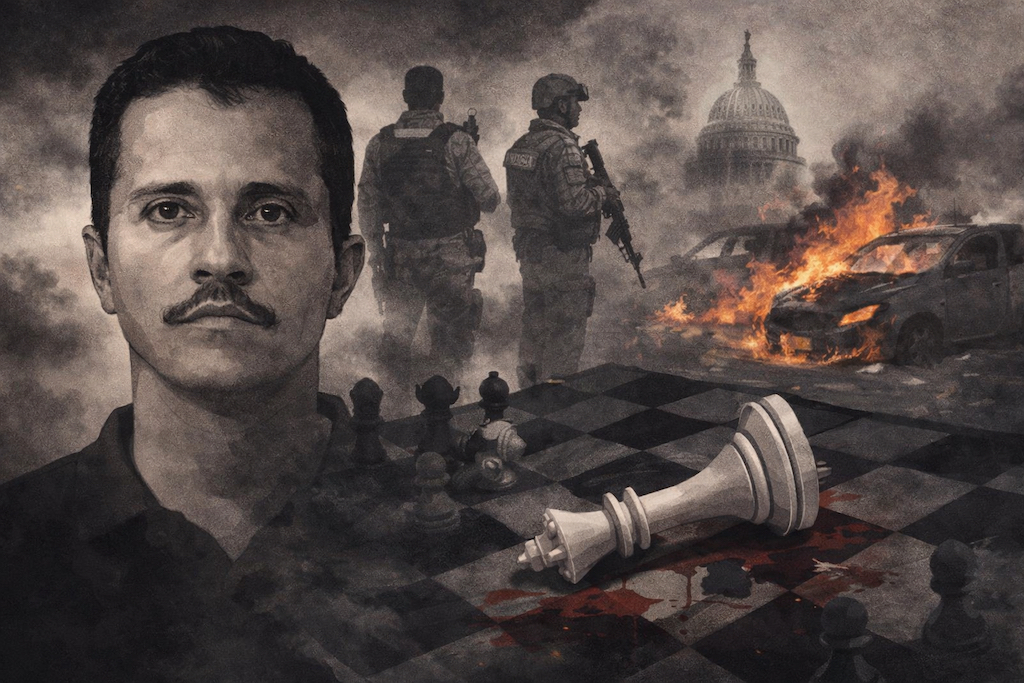
The latest government operation against the Jalisco New Generation Cartel has triggered a violent backlash across Mexico, underscoring the profound instability that follows the removal of a cartel kingpin. The death of Nemesio Oseguera Cervantes, “El Mencho,” was immediately followed by widespread retaliatory actions: dozens killed—including members of the security forces and criminal suspects—hundreds of roadblocks paralyzing cities and highways, airports thrown into chaos, and daily life disrupted in regions far beyond Jalisco.
While Mexican authorities, aided by U.S. intelligence, have celebrated the success of the operation, the aftermath has exposed the enduring fragility of public order and the limitations of the so-called kingpin strategy. Official statements from both sides of the border have been emphatic. U.S. leaders have commended Mexico’s resolve and renewed calls for more aggressive action against criminal organizations, emphasizing the “unprecedented” level of bilateral cooperation. At the same time, President Sheinbaum’s government has been steadfast in defending national sovereignty, insisting that collaboration must respect territorial boundaries and rejecting any suggestion of direct U.S. military intervention.
Yet these rhetorical victories and moments of apparent unity obscure a more troubling reality. The core drivers of the drug war remain unaltered. The illicit drug market in the United States continues to thrive, sustained by persistent demand and protected by financial and logistical infrastructures that transcend the reach of any one government. Each high-profile takedown creates a power vacuum, often inciting new waves of violence as rival factions compete for dominance. The cycle repeats, with little evidence of sustainable security.
It is highly improbable that a criminal organization of the magnitude of the Jalisco Cartel could be dismantled—financially and militarily—within Mexico, if indeed it is as vast and decentralized as portrayed, without a decisive intervention of the United States in two critical domains: the monitoring and interruption of drug-related financial flows, which almost certainly course through major American banks, and the cessation of arms sales that travel unimpeded from North to South. Both proposals, however, are fraught with doubt regarding their feasibility, given the constraints imposed by the realities of domestic power within the United States.
Nonetheless, if military intelligence possesses adequate insight into the upper ranks of such organizations, it may be conceivable—though almost certainly at the price of a profoundly bloody campaign—to decapitate, at least temporarily, the army of the drug traffickers. Yet the term “temporarily” remains inescapable. Even under the most optimistic scenario, the restoration of order might be fleeting, and the underlying structures of violence and impunity would endure.
What is not uncertain—indeed, quite the contrary—is that as long as the United States continues to avert its gaze from the root of the problem, any Mexican administration faces a veritable hydra. This is the essence of the matter: the drug market is illegal in the United States, which means it can only be dominated by those with a pronounced inclination toward risk and a willingness to defy the law. The American market is, moreover, the center of gravity of the entire trade, with a mass that dwarfs all others. Vast fortunes circulate through the financial system of the United States: they are too substantial, and unlikely to be illicitly transferable from one country to another outside formal financial conduits; and crucially, they originate within the United States itself. The United States weapons market is also the principal supplier of arms to the narcotraffickers’ irregular forces.
To exacerbate matters, anti-immigration policies have the effect of concentrating masses of impoverished people within Mexico, offering them few alternatives for survival. And as if this were not enough, Mexico’s government has traditionally suffered from chronic underfunding. Even with oil-related revenues, the fiscal base is just about 20% of GDP; minus oil, it barely reaches 10.5% to 11%, and within a greatly regressive structure. This condition has been perpetuated by resilient oligarchic power, and it prevents the state from extending its reach to all corners of the nation, not only militarily but also socially, thereby leaving open spaces for the narcotics industry to thrive.
President Sheinbaum is confronted with the necessity of remedying this situation, yet every step she takes in this direction bleeds her politically, for she must confront the powerful ruling classes of the country. Should she, in an effort to avoid such a collision, focus solely on military action without simultaneously advancing an aggressive—and undeniably costly—expansion of the state, she will lose popular support, for the nation might be plunged into a war reminiscent of Calderón’s, with tens of thousands of lives lost in vain.
Hers is an unenviable position, caught between an empire that exports a policy of brute force, displacing nuanced considerations; the imperative—which she, like any leader, understands—of subjugating the criminal power of the drug traffickers; and the need to provide peace, security, and viable opportunities for economic improvement to the impoverished majority.
The utopian solution, ironically, is the most realistic: if the United States truly wishes to resolve the problem, it must regularize the drug market, regularize migration, support Mexico with military and investigative intelligence, provide the Mexican government with economic resources, and refrain from hampering its economy with tariffs. Meanwhile, the Mexican state must not shrink but rather grow—accumulating resources to fight mid- and low-level political, administrative, and police corruption made easier by poverty, by substantially and visibly increasing social investment in the short term and expanding lucrative employment opportunities that the oligopolistic structure has long denied.
Of course, such investment policies require a planning horizon far longer than that of the myopic politicians and capital interests that dominate the United States, and they must also overcome the chronic resistance of postcolonial Mexican elites. But should these obstacles be surmounted, it is likely that sooner rather than later, perhaps surprisingly so, both sides of the border could witness considerable gains.

Francisco Larios
El autor es Doctor en Economía, escritor, y editor derevistaabril.org.